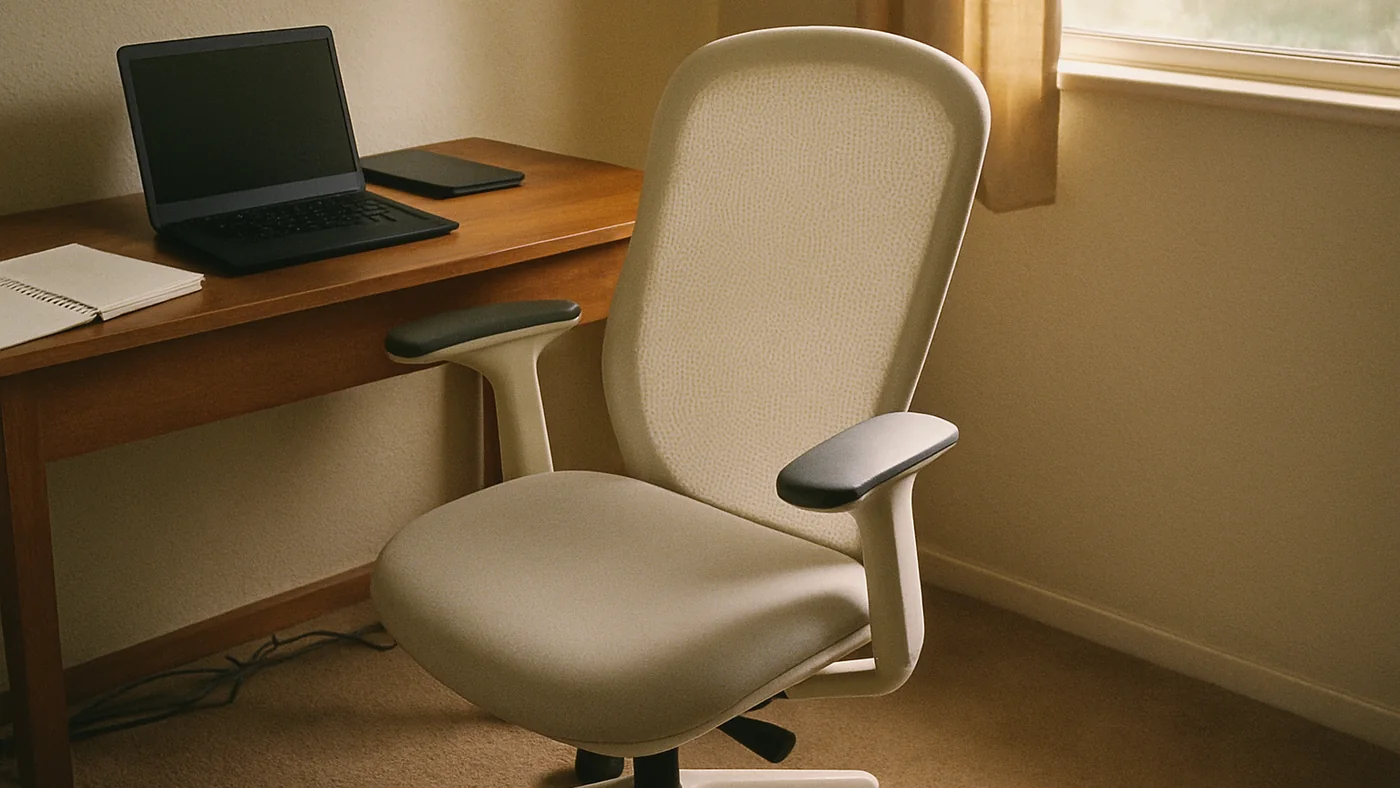
A white chair should brighten the desk, not make it precious
Last updated:
A white ergonomic office chair needs a fit check and a realistic care plan. Start with the seat's adjustment range, depth, back support, and armrest clearance beneath your desk. Then identify whether the white surface is mesh, fabric, or another upholstery type, since appearance alone does not tell you how to clean it. Compare the manufacturer's care instructions with your routine, and check return terms before relying on photographs to judge either comfort or shade.
Height, seat depth, and arms decide whether the chair feels useful after the first week.
02
Care honestly
White surfaces show habits. Compare mesh, fabric, and smooth finishes before choosing.
03
Soften the room
Pair white with wood, plants, or warm neutrals so the desk does not feel clinical.
Judge white as a working color
A white ergonomic office chair can make a workspace look lighter, cleaner, and more intentional, but it also exposes decisions that darker chairs hide. Dust, lint, desk clutter, wall color, and cable shadows become part of the picture. That does not make white a difficult choice. It simply means the chair has to be judged as both a working tool and a visible object in the room. The best white chair is not the brightest one in the photo. It is the one that fits the body, sits comfortably under the desk, and still looks calm after real daily use.
Fit comes before the finish
The practical order matters. I would start with seat height, foot position, arm clearance, and back contact before thinking about shade, stitching, or whether the frame is warm white or cool white. If the chair cannot get close enough to the keyboard, the sitter may lean forward. If the seat pan is too long, the backrest may never be used properly. If the arms are too wide, the chair can make a modest desk feel smaller. These are not dramatic problems, but they repeat every workday.
Read material care closely
White also changes how material choices read. White mesh can look airy and soft because the background shows through it. White fabric can look warmer and more residential, but it may ask for more attention around stains and lint. Smooth white upholstery can wipe clean more easily, yet it may show shine, creasing, or color transfer in a way a textured fabric does not. A useful shortlist should compare the material honestly instead of treating every white chair as the same style idea.
Match the room, not just the product image
The room around the chair should be part of the decision. White can look crisp beside wood, plants, black monitor arms, pale rugs, and warm metal lamps. It can look sterile if the rest of the room is already hard, glossy, and cold. A small office may benefit from the visual lift of a white chair, but only if the chair scale is modest and the base does not dominate the floor. The goal is a chair that makes the desk zone feel clearer, not a chair that makes every other object look messy.
Build the final shortlist
After the practical checks, the final comparison becomes easier. Use measurements to remove weak options, use material notes to remove high-maintenance choices, and use the room style to decide whether a soft off-white, warm white, or cleaner bright white belongs in the space. Then a curated product shortlist can be read with better questions. The reader is no longer asking which chair looks nicest in isolation. They are asking which chair will keep working after the first week, the first spill, and the first long afternoon.
Comparison table
Choice
Best when
Watch for
White mesh
Airflow and lighter visual weight matter.
Dust in the mesh and visible frame contrast.
White fabric
The room needs a softer residential feel.
Lint, spills, and cleaning instructions.
Smooth white upholstery
Wipe-down care is important.
Shine, creasing, and color transfer.
Shortlist rule
If two white chairs look similar, prefer the one with clearer measurements, stronger arm adjustment, easier cleaning guidance, and a return policy that does not punish a fit mistake. Then compare the finalists against LeStallion's office chair ergonomic white guide with those questions already in mind.
Final practical pass
Before treating any white ergonomic office chair as the final answer, it helps to picture three normal moments. The first is the beginning of the day, when the desk is tidy and the chair looks closest to the product photo. The second is mid-afternoon, when a sweater may be hanging on the back, a mug may sit nearby, and the user may have shifted position several times. The third is the end of the week, when dust, floor marks, and small cleaning habits are visible. A chair that still feels calm in all three moments is stronger than one that only wins the first impression.
This is especially important with white because the color makes surrounding details more noticeable. A bright chair can sharpen the line between the desk and the floor, which is helpful in a dark room. It can also make cable clutter, scuffed chair legs, and mismatched storage feel louder. The fix is not to avoid white. The fix is to choose a chair with the right scale, a finish that matches real cleaning habits, and enough warmth in the room to keep the setup from feeling clinical.
The best decision is usually the least dramatic one. Choose the chair that fits the body, slides naturally under the desk, can be maintained without worry, and supports the room rather than becoming the room. If the white finish still feels right after those checks, it is no longer just a style choice. It is part of a workspace that can stay useful and pleasant.
That final pass also protects against over-reading marketing language. Words like executive, task, breathable, or premium can be useful only when the dimensions and materials support them. A careful reader should keep those labels in the background and compare what the chair actually offers: adjustment range, seat shape, arm behavior, back support, cleaning guidance, and visual weight. Those are the details that decide whether the chair remains a good choice after the novelty fades.
When the shortlist is down to two or three options, choose the one with the clearest information rather than the most dramatic photo. Clear measurements, plain material notes, realistic lifestyle images, and transparent returns are all quiet trust signals. They make it easier to buy with confidence and easier to reject a chair that may look beautiful but leave too many practical questions unanswered.
FAQ
Is a white ergonomic chair hard to maintain?
It can need more visible cleaning than a dark chair, but material choice and daily habits matter more than the color alone.
Should I choose white mesh or upholstery?
Choose mesh for airflow and a lighter look; choose upholstery when warmth, softness, and room style matter more.
Can a white chair work in a small office?
Yes. White can visually lighten a small room if the chair scale and arm width are modest.
What should I check before color?
Check seat height, seat depth, lumbar contact, arm clearance, and caster/floor compatibility first.
Where should I compare final options?
After measuring your setup, compare the refined options with a focused white ergonomic office chair shortlist.
If white is not the finish you want, the next guide considers beige ergonomic office chairs. Compare the warmer neutral color separately from the chair's support and adjustment features.
The last useful check is whether the page has made the next action clearer. For the main guide, that means the reader should know which measurements to take, which material tradeoffs to compare, and how to judge the white finish inside a real room. For a trust page, that means the reader should understand the site's limits, contact boundaries, privacy basics, and editorial approach without being asked to believe in fake staff or invented testing claims. Clear pages do not need to sound bigger than they are. They need to be specific enough to help someone make the next decision with less noise.
If the chair still looks appealing after the reader has considered cleaning, light, desk clearance, and body fit, then the white finish has survived the practical test. That is the point of this mini-site: not to make every white chair sound perfect, but to separate useful calm from fragile showroom styling.